


Page 7 - CatalanoInfuso&Sulli_1995
P. 7
TECTONIC HISTORY OF THE SUBMERGED MAGHREBIAN CHAIN OF SICILY

 1988; Montanari, 1989; Catalano et al.,              Linosa Plateau
1993a; Grasso et al., 1993).
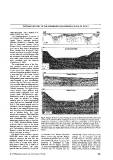
                                           Fig. 9. Pelagian Foreland. A, Line drawing of a seismic profile between the Malta and Linosa
   The palaeogeographìc evolution of       Graben. 8, the sediment fill has undergone inversion, or transpressional tectonics and is
 the Pelagian Block involveci a wide-      sealed by an unconformity, inferred as the 1.2 Ma sequence boundary. C, At the top of the
spread Triassic carbonate platfonn,        NNE-SSW trending Linosa structural high, a late Pleistocene prograding wedge shows
 probably flooreci by a Permian shal-      toplap geometries. D, Malta Graben post-Messinian syn-sedimentary Iistric norma/ faults.
low- to deeJrwater domain. During          The clastic wedge was slightly deformed and covered by sub-horizontal Pleistocene to Recent
Rhaetic-Liassic, transtensional tectonics  deposits.
gave rise to large basins (Streppenosa
basin, Catalano and D'Argenio, 1982).      by truncation in an inferred Messinian    conformably surface at the base of the
Basinal cond.itions developed through-     seismic horizon (Fig. 9A,B,D). Wedge-     package can be correlated with the
out the Mesozoic and Palaeogene, with      like sedimentary bodies (syn-rift depos-  1.2 Ma sequence boundary, elsewhere
the exception of the Malta and Lampe-      its?) formeci (Fig. 9A,B). A strong dis-  dateci at 1.2 Ma (Di Stefano et al., 1993).
dusa areas, where shallow-water condi-     continuity is developed in older          Strong downfaulting again offsets the
tions prevaileci until the Miocene         seciiments that are slightly deformed.    most recent deposits. Similar structural
(Gardiner et al., 1993).                   Up to 500 m of sediments, of Pleistocene  features are displayed by the Linosa
                                           to Recent age, are revealed. The un-      Graben, 50 km south of the Malta basin.
   The southeastern sector of the Pela-
gian platfonn, known from public
multichannel seismic profiles, consists
of two major E-W troughs, the Malta
and the Lampedusa grabens, linked by
a structural high, the Linosa Plateau
(Figs 6, 9). In this area we have
distinguished three seismostratigraphìc
units bounded by two unconformity
surfaces (Fig. 9a). The Lower unconfor-
mity separates Mesozoic-Oligocene car-
bonates from a Miocene thìnly layered
(?clastic) succession. The Upper discon-
tinuity bounds Upper Miocene sedi-
ments, mostly evaporites, from well-
layered clastic Plio-Pleistocene rocks.
Southwards, most of the pre-late Mio-
cene rocks are affected by folding,
probably due to a weak compressional
pulse. Fold axes are orientated NW-SE
(Fig. 2). This tectonic episode could be
correlateci with the Langhìan defonna-
tion seen in the onshore Hyblean fore-
land (Letouzey and Trémolières, 1980)
and in Western Sicily. The Upper
seismic unit consists of Plio-Pleistocene
sedimentary packages. They display
both extensional and inversion syn-
sedimentary tectonics (Fig. 9). Gardiner
et al. (1993), described similar tectonic
evolution further north in the Malta
Platfonn using an independent seismic
grid. Unfortunately, neither the biostra-
tigraphìc contro!, nor clear evidence of
seismic structures is shown.

   The Malta Graben exhìbits a generai
NNW-SSE trend, with a sigmoidal
shape; it merges to the west with the
Pantelleria trough. In the area studied
(Fig. 2) there is a large basin, 1600 m
deep, that is filled by up to 1500 m of
Plio-Pleistocene clastics. The basin
openeci after the Messinian, as proved

© 1995 Blackwell Science Ltd, Te"a Nova, 7, 179-188.                                 185

