


Page 5 - CatalanoInfuso&Sulli_1995
P. 5
TECTONIC HISTORY OF THE SUBMERGED MAGHREBIAN CHAIN OF SICILY

                                                                     ESE                         the Gela Thrust front (Sciacca offshore,
                                                                                                 Fig. 2) and appears as a crostai salient
                                                                 PalonnoMos.                     showing pre--late Miocene to middle
                                                                                                 Pliocene compressional (or transpres-
  - 1 D2 !S3S] D4 D5 - 6 IF4 km                                                                  sional?) deformation. Structures con-
                                                                                                 tinue southeastwards below the Gela
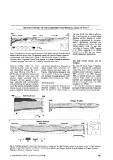
Fig. 5. Geologica/ cross-section along the Northern Sicily offshore constructed on the basis of  Thrust System (Gela TS; Fig. 6A).
available reflection seismic lines. The geologica/ section runs from the Drepano Seamount        According to Argnani (1989), Argnani
southeastwards to the Palermo Mts. offshore. 1, Plio-Pleistocene deposits; 2, Knbilian-          et al., (1989), Antonelli et al., (1988),
Calabrian Units; 3, deformed Miocene clastic deposits; 4, Cretaceous-Palaeogene imbricates;      Torelli et al., (1991) the area experi-
(? )basinal carbonates thrust units; (6) 5, platform carbonates thrust units.                    enced transcurrent deformation.

Mesozoic-Tertiary rocks of more             mount-type deposits (i.e. Ammonitico                 The Gela Thrust System and its
northerly derived units are tectoni-        Rosso), pelagic marly carbonates and                 foredeep
cally sandwiched between the Lower          earliest Miocene open-shelf clastic car-
and Upper Miocene rocks (Fig. 3).           bonates. These beds are known to crop                The Gela TS ('Gela Nappe'; Ogniben,
(b) The carbonate substratum consists of a  out in western Sicily as the Trapanese               1969) is a thin-skinned accretionary
wedge of Mesozoic ramp units, with          and Saccense palaeogeographical units                wedge (Figs 6, 7), which overthrusts its
internai duplex geometry (Fig. 3).          (Catalano, 1987; Antonelli et al., 1988).            foreland marine sediments (Catalano,
Transport direction appears to have                                                              1987; Antonelli et al., 1988; Argnani,
been eastward and southeastward,            'Deformed foreland'                                  1989). It extends laterally into onland
with shortening decreasing southeast-                                                            southern Sicily where its thickness
ward. The internai stratigraphy includes    The third area shows the character of a              increases and widespread back-thrust
Triassic-Liassic carbonate platform de-     deformed foreland. It is developed                   features are exposed (Grasso et al., 1991;
posits, overlain by Jurassic-Eocene sea-    from the Adventure Thrust Front to                   Catalano et al., 1993b).

                                                                                                   The Gela TS is formed of repeated
                                                                                                 packages of folded and faulted deposits,
                                                                                                 that are complexly thrust, mostly show-

NNE                  Gela Thrust Front      ssw

       l..eane we/1  iiiiiiiiii;;:::::=::::=====:::n o

                                            2            NNE                                     Pelagian Foreland

                                              4         q10 + •

~~~~~ 6                                                 12
                                              B

                     o 2km 10                                                                                                         I

                                        Pelagian Foreland                                                                 ...13' 15'
                                                                                                 cpSS\\6 ,..
Malto Graben                                 Linosa ploreou      Linosa Graben

                     ..++++++++++++++++++                                        o                                  '" "
                       2
                                                                                                 12km

              CJ
                1

Fig. 6. Simplified geologica/ section across the Gela tectonic wedge and the rifted Pelagian foreland in its eastern sector. 1, Plio-Pleistocene
deposits; 2, Gela Thrust System; 3, Carbonate substrate of the Hyblean and Pelagian foreland (from the bottom: pre-Triassic, Mesozoic-
Palaeogene, Miocene); 4, basement (inferred).

© 1995 Blackwell Science Ltd, Terra Nova, 7, 179-188.                                                                     183

