


Page 6 - CatalanoInfuso&Sulli_1995
P. 6
R. CATALANO ET AL.

 G B 8 E3

  12 34

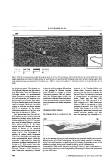
Fig. 7. NW-SE trending seismic profile showing the front of the Gela Thrust System. Relationships between the Gela foredeep basin and
nappe emplacement are shown. The basin formed in latest Pliocene and was fil/ed with Pleistocene sediments. Numbers indicate ages of third
arder depositional sequence boundaries (Di Stefano et al., 1993). 1, Sequence boundaries; 2, Messinian horizon; 3, top of carbonate unit; 4,
faults .

ing duplex geometry. The deposits are:        facies and welllog analyses differentiate   foreland of the Tunisian-Sicilian and
(a) Oligocene-Miocene clay-rich arenac-       a thin package of Pliocene deposits         Ionian chains. However, there is con-
eous Numidian Flysch; (b) Oligocene to        (about 350--400 m), overlain by a thick     troversy aver its tectonic evolution far
Tortonian clastics; (c) unconformable         Pleistocene sequence (1900 m). Seismi-      the last 5 Myr. It is believed to be a locus
Upper Tortonian-Lower Messinian clas-         cally, the Pliocene layers exhibit low      of transtensional, or extensional tec-
tics and carbonates; (d) Messinian eva-       amplitudes, while the Pleistocene depos-    tonics (Finetti and Del Ben, 1986;
porites and Lower Pliocene Trubi marls;       its are characterized by high amplitudes,   Argnani et al., 1989; Boccaletti et al.,
(e) Upper Pliocene and Lower Pleistocene      latera! continuity and chaotic reflections  1987; Antonelli et al., 1988; Grasso and
clastic carbonates. The thrust front of this  (Fig. 7).                                   Reuther, 1988), or alternatively of rifting
wedge, as well seen on seismic proffies                                                   processes (Colantoni, 1975; Illies, 1981;
(Fig. 7), is emplaced on the middle           The Eastern Sicily Channel                  Finetti, 1984; Grasso et al., 1993). The
Pleistocene succession of the Gela fore-                                                  stratigraphic framework is known from
deep basin (Catalano et al., 1993a).          The Pelagian Block is considered as the     seismic reflection proffies, well data
                                                                                          and land geology (e.g. Antonelli et al.,
   The Gela foredeep (Fig. 2) is a WNW-
ESE trending narrow, weakly deformed          NW SE
depression, partially buried by the fran-
ta! termination of the Gela TS. It extends    Fig. 8. Line drawing of a seismic profile which illustrates a possible mode/ of the progressive
from land (Hyblean Plateau) to southem        thrust formation of the Gela Thrust System. The tectonic loading resulted in a pre-nappe
Sicily offshore (Fig. 2, 6). The basin        tilting, with coeva/ formation of a distai bulge and of N-dipping norma/ faults in unitA. The
formed from late Pliocene time and is         sedimentary package forming unit B onlaps the tilting surface. Sediments thin
related to flexure of the carbonate           southeastwards, while erosion took piace on the bulge. Horizon C seals the deformation . A
substrate due to loading by the franta!       structural high, synchronous with the deposition of the package D, shows initial development
nappe (Fig. 8). The depositional fili         of a new thrust sheet.
consists of pelagic marly limestones
(Trubi Fm.), silty pelites and sandy clays
lying unconformably above Messinian
evaporites. High-resolution, integrated
calcareous plankton biostratigraphy (Di
Stefano et al., 1993) reveals three main
gaps in the Plio-Pleistocene sequence, in
the basai Pliocene, middle Pliocene and
basai Pleistocene, respectively. Seismic

184 1995 Blackwell Science Ltd, Terra Nova, 7, 179-188.

