


Page 5 - Alagna_al_ECSS2013
P. 5
A. Alagna et al. / Estuarine, Coastal and Shelf Science 119 (2013) 119e125                                    123

Mean leaf number + SE                                                                         30.00Mean rhizome length+ SE (cm) Max. leaf length+ SE (cm)
                           14

                                                                                                                                 15.00

                           6                                                                                                     0.00            T1      T2

                           0                                                                                                                 T0

                                    T0 T1 T2

Max. leaf width + SE (cm)                                                                           5.00
                           1.00

                           0.40 2.00

                           0.00           T1 T2                                                                                  0.00                T2

                                      T0                                                                                                     T1

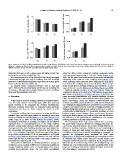
Fig. 4. Long-term variation of seedling morphological variables on two different microhabitats: Rock covered by Cystoseira amentacea var. stricta (grey); and rock covered by
Halopteris e Dilophus spp. (black). Results are showed only for variables for which significant interaction between factors Time and Microhabitat were detected. As no significant
difference between sites was detected, data within each microhabitat were pooled.

during the first year on HD. LL values were still higher on HD than       substrates offer a stable setting for seedlings anchorage, unlike
on Cy by the end of the study (Table 3b).                                sand and gravel, representing a “safe site” (sensu Harper et al.,
                                                                         1961). On the other hand, algal canopy increases the topographic
    WL ranged from 0.60 Æ 0.00 to 0.90 Æ 0.02 cm (Fig. 4), increasing    complexity of the substrate at the seedlings scale (Harper et al.,
continuously through time only in seedlings from HD. Seedlings           1965), curtailing water flow and hence reducing the drag forces
from this last Microhabitat displayed larger values of WL than those     exercised on the seedlings by currents and waves. These mecha-
from Cy after the first year (Table 3b).                                  nisms would favour seedling retention and settlement, as also
                                                                         suggested in other studies (Balestri et al., 1998a; Piazzi et al., 1999).
    LR reached values comprised between 1.82 Æ 0.14 and
4.45 Æ 0.30 cm (Fig. 4), being higher on HD than on Cy during the            Substrate stability emerges as the main feature influencing
second year, although values progressively increased in seedlings        seedling persistence in the study area. This finding is in accordance
from both Microhabitats (Table 3b).                                      with studies of Balestri et al. (1998a) and Piazzi et al. (1999) that
                                                                         found successful establishment of P. oceanica seedlings on dead
4. Discussion                                                            matte and rock but not on unconsolidated substrate as pebbles and
                                                                         gravel. Accordingly, Clarke and Kirkman (1989) observed that
    In this study P. oceanica seedlings showed microhabitat prefer-      sediment instability negatively affected establishment of Posidonia
ence for rocky substrate covered by algae, while bare sand and           spp. seedlings recolonizing blowouts and Olesen et al. (2004) found
gravel revealed to be unsuitable for seedling establishment.             a negative correlation between settlement of Enhalus acoroides and
Moreover, seedlings grew better on vegetated rocky substrates            Thalassia hemprichii seedlings and sediment thickness, as well as
covered by turf than on those covered by stands of erect                 a preferential establishment of T. hemprichii seedlings on coral
macroalgae.                                                              boulders respect to sand. However, there are also some discordant
                                                                         reports like that by Balestri and Lardicci (2008) that did not detect
    P. oceanica seedlings have been reported to occur on different       any difference in the probability of establishment of P. oceanica
substrate types but only those settled on consolidate ones have          seedlings between rocky and sandy bottoms.
found to establish successfully (Meinesz et al., 1993; Balestri et al.,
1998a; Piazzi et al., 1999; but see; Balestri and Lardicci, 2008).           The morphology of the algal canopy could further account for
Accordingly, persistence of seedlings was higher on consolidated         the more subtle variations observed in seedling persistence be-
substrates than on unconsolidated ones in this study. Seedling           tween rocky vegetated habitats, for example through different ef-
densities among rocky substrates differed between types of algal         ficiency in seedling retention. Architectural and morphological
coverage over time. Initial seedling density values were highest on      features of plant and algal canopy can affect seagrass seedling
the microhabitat represented by rock covered by turf. Such value         establishment in relation to specific morphology of propagules as
(16 Æ 1.73 seedlings/m2) was higher than those reported by Balestri      reported for Phyllospadix torrey recruiting on “host” algae
et al. (1998a) on dead matte (3.2 Æ 0.4) and pebbles (3 Æ 0.2), and      (Blanchette et al., 1999) and for Amphibolis spp. entangling on matte
by Piazzi et al. (1999) on dead matte (between 2.6 and 3.0), but         of Posidonia spp. where leaves had been excised (Clarke and
lower than the one reported by Balestri and Lardicci (2008) on           Kirkmann, 1989). This pattern is supported by the present study,
heterogeneous substrates (80 Æ 15).                                      where the looser and shorter algal turfs made of Halopteris spp. and
                                                                         Dilophus spp. reveal higher initial retention capability, while in the
    The pattern of differences in seedling persistence among mi-         long term seedlings persisted better within the higher stands of the
crohabitats can be ascribed to differences in substrate stability and    erect macroalgae C. amentacea var. stricta
canopy complexity, which can be reasonably supposed to impair
seedling post-settlement losses. On one hand, consolidated

