


Page 2 - Alagna_al_ECSS2013
P. 2
120 A. Alagna et al. / Estuarine, Coastal and Shelf Science 119 (2013) 119e125

Sand-Jensen, 1994; Balestri et al., 1998a; Piazzi et al., 1999; Olesen      north-west cost of Sicily (Italy) (Fig. 1). The two sites were chosen
et al., 2004; Whitfield et al., 2004; Orth et al., 2006a,b).                 in correspondence of two small inlets, about 800 m apart, be-
                                                                            tween 1 and 3 m deep. Both sites were characterized by rocky
    According to Harper (1977), seed dispersal patterns must pass           substrate and were comparable in terms of wave exposure and
through an environmental sieve, acting at the seedling scale, which         slope. The benthic assemblages were composed by interspersed
determines survival and recruitment of new individuals. Under-              patches of sand and gravel void of vegetation and scattered rocky
standing the environmental conditions that characterizes a site as          outcrops at both sites. Rocky substrates were covered by stands of
“safe”, (sensu Harper et al., 1961) for the establishment of propa-         Cystoseira amentacea var. stricta or by turf dominated by Halopteris
gules implies the analysis of the influence of environmental factors         and Dilophus genera.
on seedling persistence and growth (Gomez-Aparicio et al., 2005).
                                                                            2.2. Experimental design
    Studies carried out in terrestrial systems highlight the influence
of microhabitat structure on seedling recruitment. Species display              Variation in density over time was chosen as a suitable indicator
habitat preference in terms of survival and growth of young plants          of seedling persistence on different microhabitats. In order to test
after propagule dispersion (Krebs, 2001) in relation to abiotic fac-        for differences in seedling density over time, Microhabitat (Mh)
tors such as litter, light (Yu et al., 2009), topography at a scale rel-    was considered a fixed factor with five levels accounting for all
evant to the seed (Harper et al., 1965), physical and chemical soil         types of microhabitat that were relevant at the seedling scale and
characteristics, and biotic factors as the presence of pre-established      present in the study area, namely: bare sand (Sa); unvegetated
vegetation, herbivory and pathogens (Gomez-Aparicio et al., 2005).          gravel (Gr); rock covered by an algal turf composed mainly by
                                                                            Halopteris and Dilophus genera (HD); rock covered by erect mac-
    In seagrass systems few studies deal with the influence of               roalgae stands made of C. amentacea var. stricta located at 3 m (Cy)
microhabitat type on seedlings settlement and recruitment, prob-            and 1 m depth (SCy) respectively. Except for SCy, all habitat types
ably due to the difficulty to follow seedling in the field. Among             were at 3 m depth.
habitat features that influence seagrass early life history, small-scale
topography proved to affect dispersion and germination patterns                 Time (Ti) was another fixed and orthogonal factor with three
(Orth et al., 1994, 2003; Inglis, 2000; Balestri and Lardicci, 2008)        levels, namely two months after the massive settlement event (T0),
while substratum type and stability can influence seedling survival          one (T1) and two (T2) years after settlement. The factor Site
and recruitment (Piazzi et al., 1999; Olesen et al., 2004), together        (Si(Mh)), with two levels (S1 and S2) was random and nested in
with the presence and composition of algal canopy (Blanchette et al.,       Microhabitat. There were 8 replicates per each combination of
1999), depth (Piazzi et al., 1999), physical disturbance (Balestri et al.,  factors.
1998a), light (Domínguez et al., 2012) and nutrient limitation
(Balestri et al., 2009). By contrast, density (Orth et al., 2003) does not      Seedling short-term growth was compared among those
seem to affect seedling development, except at very high level              Microhabitat levels where seedlings lasted enough (Sa, HD and Cy).
(Balestri and Lardicci, 2008). Nevertheless, the influence of micro-         Time was a fixed, orthogonal factor with two levels representing
habitat features on seedlings is species-specific because it is related      the settlement (T0) and one month after settlement (T1). The factor
to biological and ecological characteristics of the focused species.        Site was defined as above. There were 3 replicates per each com-
                                                                            bination of factors in this experimental design.
    Posidonia oceanica shows highly variable flowering and fruit
production. Synchronous massive events, probably driven by high                 Seedling long-term growth was compared considering Micro-
temperatures, occur every 8e10 years (Diaz-Almela et al., 2006).            habitat with only two levels (HD and Cy) where seedlings lasted
Mature fruits are buoyant with high dispersal potential. However,           during the whole study period. Time was a fixed, orthogonal factor
seedlings recruitment in the field has seldom been observed, and             with 3 levels defined at the time of settlement and yearly intervals
the successful initiation of a new patch from a seedling is consid-         from it (T0, T1 and T2). The factor Site was defined as above. There
ered to be rare (Diaz-Almela et al., 2008). As seedling looses during       were 3 replicates per each combination of factors.
the first year of life is high (about 70% according to Balestri et al.,
2009) the period between germination and recruitment represent
a crucial stage in the life cycle of P. oceanica. The comprehension of
which environmental factors act as major drivers in P. oceanica
seedling recruitment pattern is thus of prime importance for con-
servation, management and restoration efforts.

    The intense flowering event of P. oceanica meadows registered
in the fall of 2003 (Balestri, 2004; Diaz-Almela et al., 2006) pro-
duced the spreading of a large number of seeds along Mediterra-
nean coast during the following spring. In summer 2004 a massive
number of seedlings was found along the north coast of Favignana
island, SW Sicily (Italy). This event offered the opportunity to study
seedling post-settlement progress in heterogeneous embayments
on a rocky shore were P. oceanica naturally occurs. It was predicted
that unequal suitability among the existing microhabitat types
would lead to differences in seedling density over time. It was also
expected that seedlings in distinct microhabitats would show dif-
ferent growth rates, both in the short and the long terms.

2. Material and methods

2.1. Study area

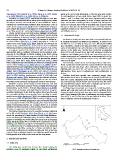
    The study was carried out in two sites located along the                Fig. 1. Geographic location of the study area.
northern coast of Favignana Island, in the Egadi archipelago,

