


Page 8 - Sulli_eall_2012
P. 8
148                                                           Sulli A. et al.

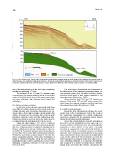
Fig. 8 - In the Palermo and Termini Gulfs, sedimentary progradational wedges along the shelf margin show reflection-free seismic facies or
high frequency, low amplitude downlapping reflectors. Almost two progradational wedges are stacked along the shelf margin. Along the up-
per slope, Quaternary horizons are truncated by a canyon incision of a tributary of the Eleuterio canyon (Sparker 1 kJ seismic profile).

sion of this unit extends up to the shelf edge, completely           The shelf edge is depositional and corresponds to
burying the underlying TST unit.                              the offlap break of the outermost prograding wedge, ex-
                                                              cept around La Barra (Fig. 10) where a deeper, erosive,
       The thickness of the TST and HST deposits rapid-       structural shelf break is also present seaward of the
ly varies along the margin resulting thicker in the central   depositional one (Agate et al., 2004).
sector of the gulfs and in front of the entry points along
the coast; otherwise, their thickness thins towards the              Along the inner shelf FSST and LST deposits are
gulf edges.                                                   absent. In this sector TST and HST units are very thin,
                                                              often thinner than seismic resolution but they have been
5.2. Offshore Palermo Salient                                 documented by samples (Ferretti et al., 1994).
       In this area, inner and outer continental shelf show
                                                              5.3. Gulf of Castellammare
very different setting. Along the inner shelf rocky sub-             Except the San Vito peninsula offshore, the conti-
stratum outcrops very extensively, truncated by an ero-
sional surface; in the high resolution seismic profiles this  nental shelf of the Castellammare Gulf is the result of
surface is imaged as the reflective top of the acoustic       the Quaternary progradation of a clastic sedimentary
basement. Along the outer shelf the sedimentary Qua-          succession truncated by the erosional surface formed
ternary succession is present, and in the upper part we       during the last glacioeustatic fluctuation.
recognized deposits pertaining to the LQDS (Fig. 9).
                                                                     Above this unconformity the deposits pertaining to
       Along the shelf margin, FSST and LST deposits          the LQDS can be subdivided into four units (Fig. 11),
are stacked generating sedimentary prograding wedges          showing different sedimentary and seismostratigraphic
with thin, oblique parallel or tangential downlapping re-     expression in each sectors of the basin. The lower
flectors; reflection-free seismic configuration is also pre-  boundary is represented on the continental shelf by an
sent (Fig. 9). Prograding wedges extend downslope up          unconformity surface of subaerial exposure and fluvial
to more than 200 m water depth and landward onlap the         down-cut, and a correlative paraconformity on the upper
Pleistocene succession at water depth of 110-120. Up-         slope, characterised by the occurrence of multiple linked
wards, prograding reflector show lateral termination of       scars. On the shelf, at 70-90 m below the sea level, the
toplap or erosional truncation. Along the shelf edge the      lower boundary is a polygenic regressive surface of ero-
prograding wedge is almost continuous for about 15 km         sion, extending landwards to a subaerial unconformity,
displaying a maximum extension of 2 km and a thick-           and seawards to a marine erosional surface. Morpho-
ness up to 30 m.                                              logical steps and terrace-like features characterize the

