


Page 5 - Sulli_eall_2012
P. 5
Variability of depositional setting along the north-western Sicily continental shelf (Italy) ...                 145

                                                                                                  tural-erosive” platform, with rougher mor-

                                                                                                  phology, mainly in the inner shelf (Fig. 2).

                                                                                                  The continental shelf, 5 to 8 km wide, is

                                                                                                  separated, at depth of 60-70 m, by a con-

                                                                                                  vex break-in-slope, in inner and outer

                                                                                                  shelf. In the inner shelf a number of

                                                                                                  breaks-in-slopes linked to submerged

                                                                                                  paleo-cliff have been detected at -8 m, -15

                                                                                                  m, -35 m, -53 m. In the outer shelf two

                                                                                                  sectors are separated by a prominent

                                                                                                  concave break-in-slope 110-120 m deep.

                                                                                                  Landward of this boundary the sea floor is

                                                                                                  characterized by rills, isolated relieves and

                                                                                                  a few concave breaks-in-slopes, interpret-

                                                                                                  ed (Lucido, 1992) as paleo-shorelines.

                                                                                                  Elongated morphological relieves, parallel

                                                                                                  to the isobaths, and interspaced by narrow

                                                                                                  depressions have their tops at -75 m, -85

                                                                                                  m, -95 m and -105 m. On the base of car-

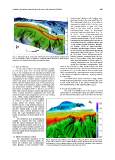
Fig. 3 - Along the Gulf of Termini the shelf break shows almost always a linear trend bonate cements, recovered from the fea-
but, in the western sector, it displays a scalloped pattern because of small canyon ture at -75 m (Lucido, 1992), these relievies

headscars (3D shaded relief model, view from the Nord).                                           have been interpreted as beach rocks, re-

                                                                                                  cording subsequent sea level still stands

                                                                                                  during the Holocene transgression. Sea-

4.2. Gulf of Palermo                                        ward of the 110-120 m deep break-in-slope, the shelf
       In the Gulf of Palermo the shelf edge lies at depth  margin is characterized by a sub-horizontal surface slop-
                                                            ing at about 0.5°, up to 4 km wide. In this sector the sea-
of 120-150 m, and 2.3 to 7.5 km far from the coastline      bed is represented by a paleo-wave-cut terrace draped by
(Fig. 2). As consequence, the average continental shelf     a thin wedge of Holocene sediments, tapering towards
steepness ranges between 3° in the central sector up to     the shelf edge.
8° offshore Monte Pellegrino. Different features can be
distinguished in the western sector, where the shelf is            The shelf break, about 140-150 m deep, shows
narrow and steep, and isolated and scattered rocky re-      mostly prograding geometry, except offshore Capo Gal-
lieves make the seabed rough, and in the southern sec-      lo and Punta Raisi and in the canyon headscars, here

tor, less steep and showing a regular morphology with-      less extensive than in the adjacent gulfs (Fig. 2).

out pronounced relieves. Offshore Monte Pellegrino

promontory, at depth of 89-92 m, 60-70 m and 35-40 m,       4.4. Gulf of Castellammare

three main concave breaks in slopes with wave-cut plat-                                           The Gulf of Castellammare is the largest coastal

forms at base document subsequent sea level still-          embayment in north-western Sicily, bounded to the East

stands during the last transgression (16-5.5 ka; Fleming    by the Palermo Mountains and to the West by the San

et al., 1998). Small, isolated relieves oc-

cur in the outer shelf, with the top at depth

of 75-90 m, as well as in the southern

sector, where the smooth seabed is

moved only by a few isolated mound. In

the transition zone between the Palermo

and the Termini gulfs, a sharp concave

break in slope, several kilometers long,

faces the Capo Mongerbino-Capo Zaf-

ferano promontory at water depth of 80-

100 m.

The shelf break is as prograding and

straight as erosive and very scalloped

near the canyon headscars that are ex-

tensive along the western sector (Fig. 4).

Between the Oreto and the Eleuterio river

mouths, no evident shelf break is present:

here the margin trends straight but it does

not prograde.

4.3. Offshore Palermo Salient                  Fig. 4 - Extensive slope failures carve the upper slope sea floor in the western sector
       The submerged extension of the          of the Gulf of Palermo. Here, small and large canyon heads breach the shelf edge
                                               that assumes a very scalloped pattern. a) shelf break; b) submarine slide headscar;
Monti di Palermo structural salient, be-       c) canyon thalweg (3D shaded relief model, view from East).
tween the Palermo and Castellammare
Gulfs, displays a more extensive “struc-

