


Page 2 - Morticelli_et_al2016
P. 2
2 M. GASPARO MORTICELLI ET AL.

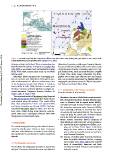
Downloaded by [Universita di Palermo] at 02:49 07 January 2016  Figure 1. Structural map of western Sicily and its offshore area. (a) Location map showing the Egadi Islands in the context of the
                                                                central Mediterranean area (modified from Catalano et al., 2013).

                                                                Adventura Bank, the Sicilian FTB structural setting has     (Marettimo Formation, middle-upper Triassic); dolomitic
                                                                been illustrated (Catalano, D’Argenio, & Torelli, 1989;     breccias and dolostones (Monte Falcone Formation, Lias);
                                                                Sulli, 2000) as an eastward and southeastward verging,      cherty limestone (Scaturro Formation, upper Lias–Dog-
                                                                about 10 km-thick, tectonic stack made up of several        ger); bedded cherts, marls and marly limestone (Argilliti
                                                                tectonic units.                                             di Punta Troia, Malm–Lower Cretaceous). We distin-
                                                                                                                            guished two tectonic units (Falcone unit and Bassano
                                                                   Marettimo Island represents the outcropping por-         unit, top to bottom) characterized by (slightly) different
                                                                tion of a tectonic unit (Marettimo Unit) which over-        stratigraphic successions, named the ‘Falcone succession’
                                                                rides southeastward the Miocene sedimentary cover           and ‘Bassano succession’ (Main Map).
                                                                of the Favignana-Levanzo Unit (Figure 1; Catalano,
                                                                Infuso, Milia, & Sulli, 1993); the latter is made up of     4.1.1 Stratigraphy of the Falcone succession
                                                                the Meso-Cenozoic carbonate platform to pelagic sea-        From the bottom, it is formed by:
                                                                mount succession (Trapanese domain; Catalano, Di
                                                                Stefano, Sulli, & Vitale, 1996).                            . Marettimo Formation: blackish bituminous stromato-
                                                                                                                               lites, stromatolitic limestone, blackish dolomitic lime-
                                                                   The structural model of Marettimo Island depicted           stone to dolomites rich in organic matter (MARa),
                                                                by Hill and Hayward (1988) shows three main tectonic           microbial laminated fenestral limestone with tepee-
                                                                units stacked along flat surfaces. This model differs           like desiccation structures, oolitic limestone (MARd;
                                                                from those proposed by Giunta and Liguori (1973)               Figure 2(e)–(h)); yellowish to brownish thin layers
                                                                and Abate, Incandela, and Renda (1999). The latter             of marls locally interbedded (MARb). This formation
                                                                considered Marettimo Island as made-up of four tec-            crops out along the eastern side of Monte Falcone
                                                                tonic units, settled during a late Miocene compres-            and in the Pizzo Spirone area (Main Map).
                                                                sional event and a subsequent Pliocene NNE-SSW
                                                                transpressive to transcurrent event.                        . Monte Falcone Formation (MFA) composed of
                                                                                                                               three lithofacies with lateral and vertical transition:
                                                                4. Stratigraphy                                                (a) massive limestone conglomerates (MFA1, crop-
                                                                                                                                    ping out at Punta Troia; Figure 2 (c); Main
                                                                The overall stratigraphic setting of the Island is charac-          Map); the clasts, cobbles or boulders, are light
                                                                terized by middle-upper Triassic to lower Cretaceous                grey to white stromatolitic limestone and lami-
                                                                carbonate rocks (Mesozoic succession) covered, along                nated fenestral limestone;
                                                                the coastal belt, by continental to marine Quaternary          (b) breccias of shallow water dolomitic limestone,
                                                                deposits.                                                           white to pinkish dolomites (MFA2, cropping
                                                                                                                                    out at Punta Troia; Main Map); poor rounded
                                                                4.1 The Mesozoic succession                                         clasts of stromatolitic limestone and black
                                                                                                                                    microbial laminated limestone surrounded by
                                                                On the whole, the stratigraphic succession is represented           dolomitic matrix;
                                                                by Figure 2: limestone, dolomitic limestone and dolomites

