


Page 3 - Barrocu_2003
P. 3
SEAWATER INTRUSION IN THE COASTAT AQUIFERS OF ITALY

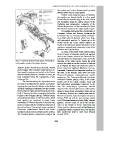
Figure 1. Hydrogeological sketch-map of Italy. Arrows indicate  first sector and is then characterized by sandy
                                                                deposits which form a major aquifer.
coastal aquifers endangered by saltwater intrusion.
                                                                      Farther south along the coasts of Calabria,
   Timavo. In the coastal areas of Friuli, Venetia              the aquifers are hosted chiefly in a few small
   and Romagna, rather complex multi-layered con-               Recent alluvial deposits lying at the foot of hills
   fined aquifer systems are hosted in the Recent               and mountains along the valleys incised in the
   alluvium deltaic plains of a number of rivers, the           crystalline and metamorphic complexes of the
   most important being the Tagliamento, Piave,                 Sila and Aspromonte. On the east coast, the Sibari
   Adige and Po.                                                alluvial plain represents the major aquifer region.

           The land bordering the Apennines to the                    Proceeding northwards the coastal plains of
   east may be divided into two sectors, one extend-            Campania, Latium and Tuscany, bordering the
   ing along the coast from the Marche to the Molise,           Tyrrhenian Sea are composed chiefly of Quater-
   and then continuing southwards into the Bradano              nary deltaic alluvial deposits which form large,
   trench between Puglia and Basilicata down to the             well-replenished aquifers. In Liguria up to the
   Gulf of Taranto, the other comprising the Apulian            French border the major coastal aquifers are
   regions of the Gargano, Murge, Tavoliere plain,              found in the Mesozoic karstic limestones of the
   and Salento peninsula. In the first sector, small            marlstone, dolomite and calcarenite series of the
   local aquifers are contained in sandy lenses                 Maritime and Ligurian Alps.
   interbedded in Pliocene deposits of clay and mud,
   many in contact with the Quaternary alluvium of                    In Sicily, in the entire north-eastern portion
   the val1ey floors. The second sector consists of             of the Province of Messina, small local aquifers
   Cretaceous subhorizontal fissured and karstic                occur in the fracture zones of the Caenozoic fly-
   limestones which form excellent aquifer systems.             sch and Palaeozoic metamorphic rocks and in the
   The Tavoliere plain is connected to a strip of the           alluvium of the valley floors. Along the north
                                                                coast of the island across the Province of Palermo
                                                                up to Trapani, the Mesozoic-Caenozoic series of
                                                                karstic calcareous highlands (Madonie, Imerese,
                                                                Panormidi, Trapanesi) host important aquifers. To
                                                                the west, in the Marsala zone, there are major
                                                                P1iocene-P1eistocene sandy-calcarenite aquifer
                                                                complexes. The Cretaceous-Miocene limestone
                                                                formation Hyblean plateau, rising in the south-
                                                                eastern part of the island, contains major and
                                                                well-replenished groundwater resources. To the
                                                                east, the sandy-clayey Quaternary alluvial
                                                                deposits of the Catania plain host a small aquifer,
                                                                where in many places groundwater floats on top
                                                                of saltwater. Between the Catania plain and the
                                                                Nebrodi mountains, Etna, the highest vo1cano in
                                                                Europe (3340 m) with its vast outcrops spread
                                                                over 1300 square kilometres, hosts Sicily’s largest
                                                                aquifers. Off the coasts of Sicily the volcanic
                                                                rocks of the islands of Eo1ie, Pantel1eria and
                                                                Ustica, and the calcareous rock of the Egadi and
                                                                Lampedusa islands, constitute very poor aquifers,
                                                                with insufficient yield to meet local demand
                                                                (Aureli, 1991).

209

